The history of the Musée du quai Branly – Jacques Chirac
At a glance
- Opened June 2006; twentieth anniversary in 2026
- Announced 1996, by President Jacques Chirac
- Institution created 14 July 1998
- Renamed Added “Jacques Chirac” in 2016
- Sources of the collection Musée de l’Homme; Arts d’Afrique et d’Océanie
- Architect Jean Nouvel; garden by Gilles Clément
Every museum is an argument about what belongs in a museum, and this one has had that argument more openly than most. The building is only twenty years old, but the collection inside it is the product of a century of French institutions renaming themselves, and the debate about what to call the objects, and where they should be, is not finished.
From the Musée des Colonies to the Arts d’Afrique et d’Océanie
One strand of the collection begins in 1931 with the Musée des Colonies, opened for the colonial exhibition of that year. It became the Musée de la France d’outre-mer in 1935 and, after the empire was gone, the Musée national des Arts d’Afrique et d’Océanie. Each name tells you what the objects were thought to be for at the time: first evidence of possession, then evidence of a relationship, then, at last, art.
The Musée de l’Homme
The other, larger strand came from the ethnography holdings of the Musée de l’Homme at the Trocadéro, across the river. Those objects had been collected as scientific specimens of human societies rather than as works of art, and their transfer to a museum that would light them like sculpture was the single most contested decision in the project. Whether you call the results art or ethnography still shapes how you read the labels on the plateau. The museum itself now speaks of the arts and civilisations of four continents, and avoids the older phrase “arts premiers” in its own description.
Chirac’s project: 1996 to 2006
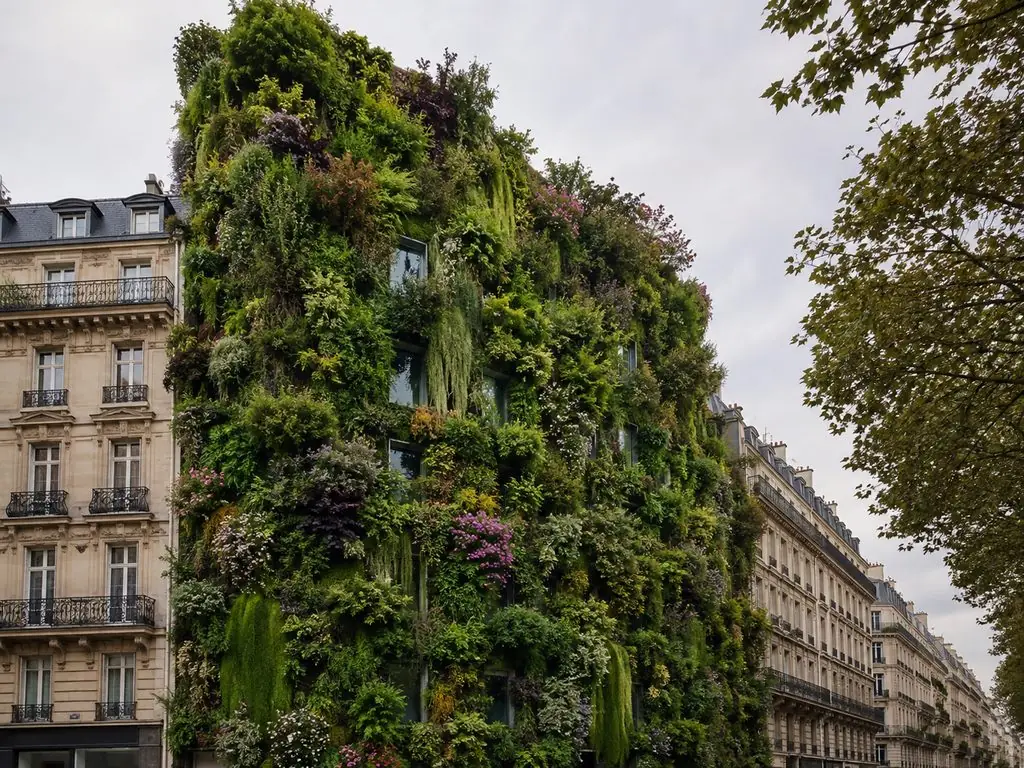
Jacques Chirac, a collector of non-European art since long before he was president, announced a “musée des Civilisations et des Arts premiers” in 1996. The public institution charged with building it was created on 14 July 1998. Jean Nouvel won the architecture competition; Gilles Clément designed the garden and Patrick Blanc the green wall (more on both on the garden page). The museum opened in June 2006 with roughly 3,500 objects on display out of some 370,000 in the collection, a proportion that still holds. In 2025 it welcomed 1,394,000 visitors, one of its best years.
The 2016 renaming
In 2016 the museum added Chirac’s name to its own, becoming the Musée du quai Branly – Jacques Chirac. The site keeps the shorter form because that is what everyone in Paris says, but the long form is on the tickets and the signage. The museum held its twentieth anniversary festival from 19 to 21 June 2026; the 2026 exhibitions page covers the anniversary events still to come.
Who was Édouard Branly?
The quay, and so the museum, is named after Édouard Branly (1844–1940), a physicist who taught at the Institut Catholique de Paris and who in 1890 invented the coherer, an early detector of radio waves. He has nothing to do with the collection; the museum simply took the name of its street, as Parisian institutions often do. Then in 2021 the city renamed the quay itself Quai Jacques-Chirac, which is why the address is now 37 quai Jacques Chirac while the museum keeps “quai Branly” in its name. It confuses taxi drivers and search engines alike; the how to get there page uses both.
Restitution
Like every European museum holding objects from former colonies, the quai Branly is part of France’s ongoing restitution discussions, and the labels in the Africa section in particular have grown more careful about provenance in the years I have been visiting. I will leave the specifics to the museum and the governments concerned.
The building as history
Nouvel’s building was itself an argument: a museum on pilotis above a garden, hidden from the quay by a glass screen, with a single wall-less plateau instead of rooms and coloured boxes pushed out of the north facade. It was meant to feel unlike the Louvre, and it does. Whether that was the right way to show these particular objects is a question I still turn over on the ramp; the what to see page gives you the route to judge for yourself.
Frequently asked questions
Why is it called the quai Branly?
Because it stands on the quai Branly, named after the physicist Édouard Branly (1844–1940), inventor of the coherer. The quay was renamed Quai Jacques-Chirac in 2021, but the museum kept its name; the address page uses both.
When did the Musée du quai Branly open?
June 2006, ten years after Jacques Chirac announced it in 1996 and eight years after the institution was created on 14 July 1998. It marked its twentieth anniversary with a festival on 19 to 21 June 2026; see the 2026 page.
Why does the museum have Jacques Chirac’s name?
Chirac, a lifelong collector of non-European art, was the president who drove the project. The museum added his name in 2016.
Where did the collection come from?
Mainly from the ethnography holdings of the Musée de l’Homme and from the Musée national des Arts d’Afrique et d’Océanie, which began life as the 1931 Musée des Colonies. About 370,000 objects in all, with roughly 3,500 on display; the what to see page walks through them.
Who designed the building?
Jean Nouvel designed the museum, Gilles Clément the 18,000 m² garden and Patrick Blanc the green wall. The garden page covers the last two.